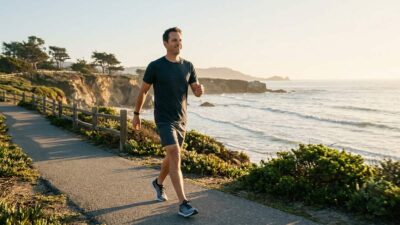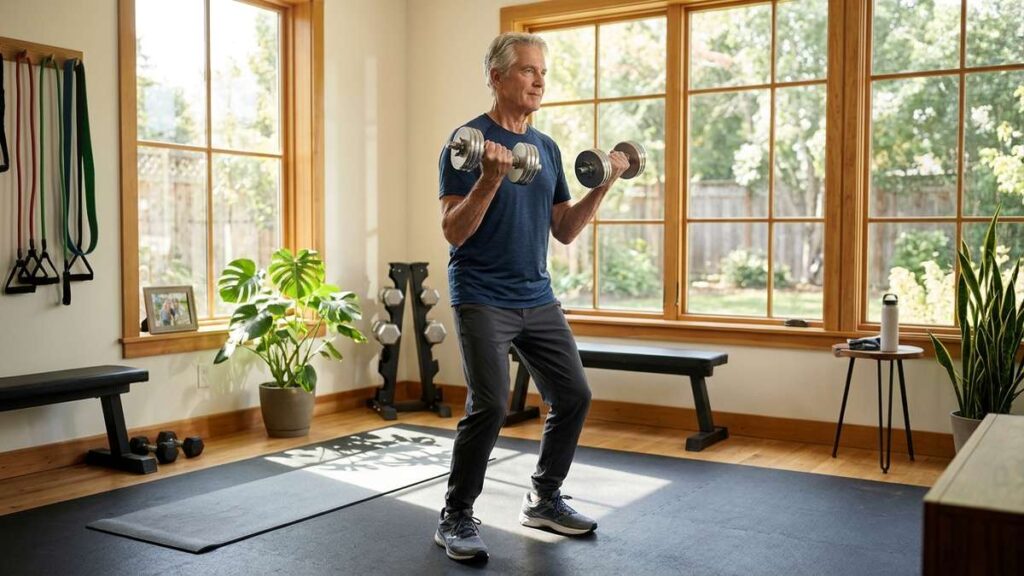
For generations, conventional medical wisdom offered aging adults well-intentioned but deeply flawed fitness advice. When people crossed into their forties, fifties, sixties, and beyond, they were frequently told to slow down, take it easy, and avoid strenuous physical exertion. If they exercised at all, they were advised to stick to gentle walking, stationary cycling, or water aerobics. Lifting heavy weights was widely regarded as a young person’s game, something reserved for twenty-something athletes and bodybuilders seeking bulging biceps.
Modern sports medicine, geriatric science, and longevity research have completely overturned this outdated dogma. Today, longevity experts, orthopedic surgeons, and neuroscientists agree on a profound, non-negotiable reality: resistance and strength training is not an optional hobby for aging adults; it is the single most powerful, transformative intervention available to preserve vitality, independence, and cognitive health as you age.
As the human body journeys past the age of thirty, it encounters a quiet, insidious biological phenomenon known as sarcopenia: the involuntary loss of skeletal muscle mass, strength, and function. Left unchecked, sedentary adults lose between three and eight percent of their muscle mass every decade after thirty, an acceleration rate that steepens dramatically after age sixty.
This loss of muscle is not merely an aesthetic concern. Muscle mass is your metabolic engine, your physical armor against falls and fractures, your primary glucose sink for preventing type 2 diabetes, and the mechanical foundation of your personal autonomy. When you lose muscle, you do not just lose physical strength; you lose the ability to climb stairs effortlessly, carry your own groceries, play on the floor with grandchildren, and live independently in your own home.
This comprehensive instructional guide explores the physiological science of strength training for longevity. You will discover why muscle is the premier currency of healthy aging, how resistance exercise protects your bones and brain, and a safe, accessible, beginner-friendly strength framework you can start implementing today.
Sarcopenia and Dynapenia: The Silent Thieves of Autonomy
To understand why lifting weights is essential as you get older, you must distinguish between two related clinical terms: sarcopenia (the loss of muscle size) and dynapenia (the loss of muscle strength and power).
While muscle size naturally diminishes with age, muscle power declines at nearly double the rate. Power is the ability to generate force quickly. When an older adult stumbles over an uneven sidewalk curb or slips on a slick patch of ice, it is not endurance that saves them from a catastrophic fall; it is explosive muscular power in the hips, quadriceps, and core reacting within a split second to plant a stabilizing foot.
Cardiovascular exercise like jogging or walking, while fantastic for heart and circulatory health, does virtually nothing to prevent the loss of type II fast-twitch muscle fibers. Type II fibers are specifically responsible for strength, power, and rapid balance recovery. The only way to stimulate, preserve, and rebuild these fast-twitch motor units is by placing skeletal muscles under meaningful mechanical tension through progressive resistance training.
When you challenge your muscles with weights, resistance bands, or bodyweight exercises, you send an unmistakable biological signal to your genetic machinery: “This organism requires strength to survive; rebuild and fortify these fibers.”
The Metabolic and Hormonal Shield: Muscle as an Endocrine Organ
For decades, muscle was viewed simply as biological rope: mechanical tissue whose only purpose was pulling bones across joints to create movement. Today, physiology recognizes skeletal muscle as the largest endocrine and metabolic organ in the entire human body.
When your muscles contract against resistance, they release powerful signaling molecules called myokines directly into your bloodstream. Myokines act as cellular messengers that travel throughout your body, performing critical systemic repairs: * Reducing Systemic Inflammation: Chronic low-grade inflammation is the root driver of cardiovascular disease, Alzheimer’s, and metabolic syndrome. Exercise-induced myokines actively suppress inflammatory cytokines, protecting your vascular system. * Enhancing Insulin Sensitivity: Skeletal muscle accounts for approximately 80 percent of total glucose clearance after a meal. As you build and maintain lean muscle mass, your body becomes extraordinarily efficient at absorbing glucose from your bloodstream, dramatically lowering your risk of insulin resistance, prediabetes, and type 2 diabetes. * Boosting Brain-Derived Neurotrophic Factor (BDNF): Resistance training triggers the release of BDNF in the brain, often described by neuroscientists as “Miracle-Gro for the brain.” BDNF stimulates neuroplasticity, encourages the growth of new neurons in the hippocampus, and provides robust protection against cognitive decline and dementia.
Osteoporosis and Bone Density: The Mechanical Loading Secret
Alongside muscle loss, progressive bone density loss (osteopenia and osteoporosis) poses one of the gravest threats to aging adults. A fall resulting in a fractured hip is often the catalyst for a rapid, downward health spiral, with nearly thirty percent of older adults dying within twelve months of a hip fracture due to complications and immobility.
Calcium supplements and pharmaceuticals can play a supportive role, but bone is living, dynamic tissue that responds primarily to physical mechanical stress. This biological reality is known as Wolff’s Law: bone adapts and grows denser in direct response to the mechanical loads placed upon it.
When you perform a squat, a deadlift, or an overhead press, your muscles pull forcefully against your skeletal bones. This mechanical strain creates microscopic piezoelectric charges within the bone matrix, stimulating osteoblasts (bone-building cells) to lay down new calcium and mineral architecture. Weight-bearing resistance training literally thickens and fortifies your bones, transforming fragile, porous skeletons into dense, break-resistant frameworks.
Joint Health and Chronic Pain Relief: Rebuilding Your Physical Armor
A tragic misconception among older adults is that lifting weights will damage their aging joints or aggravate arthritis. The exact opposite is true.
Joints do not possess their own independent blood supply; their cartilage receives lubrication, oxygen, and nutrients through the movement of synovial fluid, which is circulated during loaded physical motion. Furthermore, chronic joint pain in the knees, hips, and lower back is frequently caused by muscular weakness and imbalances in the surrounding tissues.
When your glutes, hamstrings, and quadriceps are weak, every step you take transfers harsh impact forces directly into your knee cartilage and lumbar spine. When you build strong, balanced leg muscles, those muscles act as high-performance shock absorbers, stabilizing joint tracking and relieving chronic joint pain. Far from wearing your joints out, intelligent strength training provides the supportive muscular armor your joints desperately need to function pain-free.
A Safe, Accessible Beginner Strength Framework
Starting a strength training routine in midlife or beyond does not require bench-pressing massive iron barbells or doing complex Olympic lifts. You should focus on five fundamental, functional human movement patterns that mirror everyday life activities:
1. The Squat Pattern (Knee-Dominant Lower Body)
- Everyday Application: Sitting down into a chair and standing back up without using your hands for support.
- Beginner Exercise: The Box Squat or Goblet Squat. Stand in front of a sturdy dining chair with feet shoulder-width apart. Hinge your hips backward, bend your knees, and lower your hips under control until your glutes touch the chair seat. Pause briefly without collapsing, press through your heels, and stand back up tall.
2. The Hinge Pattern (Hip-Dominant Posterior Chain)
- Everyday Application: Bending over to pick up a heavy grandchild, a bag of garden soil, or dropped luggage from the floor with a flat, protected spine.
- Beginner Exercise: The Dumbbell Romanian Deadlift or Glute Bridge. Holding light dumbbells against your thighs, unlock your knees slightly and push your hips straight backward as if trying to touch an imaginary wall behind you with your tailbone, keeping your back straight and chest proud. Squeeze your glutes to return to standing.
3. The Pushing Pattern (Upper Body Press)
- Everyday Application: Pushing open a heavy commercial door or pushing yourself up off the floor after a fall.
- Beginner Exercise: The Incline Push-Up. Place your hands on a kitchen counter or sturdy dining table. Keeping your body in a straight plank line from head to heels, lower your chest slowly toward the edge, then press firmly back up to full arm extension.
4. The Pulling Pattern (Upper Body Row)
- Everyday Application: Opening heavy sliding doors, pulling open drawers, and maintaining upright posture to prevent forward-hunching shoulders.
- Beginner Exercise: The Resistance Band Seated Row. Sit on the floor with legs extended, loop a secure resistance band around the arches of your feet, and pull the handles toward your lower ribs, actively squeezing your shoulder blades together like cracking a walnut between them.
5. The Loaded Carry Pattern (Core and Grip Stability)
- Everyday Application: Carrying heavy grocery bags from the car into the house with balance and poise.
- Beginner Exercise: The Farmer’s Walk. Pick up two moderately heavy dumbbells or filled water jugs, one in each hand. Stand tall with your shoulders pulled back and down, brace your core, and walk with deliberate, controlled footsteps for 30 to 45 seconds.
Practical Rules for Lifelong Strength Success
To ensure your strength training journey is safe, joyful, and sustainable over decades, follow these foundational golden rules:
- Prioritize Pristine Form Over Weight: Never sacrifice clean, controlled technique to lift a heavier dumbbell. Leave your ego outside the door. Controlled, smooth repetitions through a full range of motion build strength while keeping connective tissues completely safe.
- Train Two to Three Days Per Week: You do not need to live in the gym. Two or three focused 35-minute full-body sessions per week provide over ninety percent of the longevity benefits.
- Honor Recovery and Prioritize Dietary Protein: Muscles do not grow in the gym; they are broken down during exercise and rebuilt stronger during rest. Ensure you get seven to eight hours of quality sleep, and consume adequate dietary protein (roughly 0.7 to 1.0 grams of protein per pound of target body weight daily) to give your body the essential amino acids required to repair and synthesize new muscle tissue.
The Neurological Connection: Strength and the Mind
Beyond physiological and hormonal benefits, strength training exercises a profound, direct influence on emotional and psychological resilience. In clinical psychology, resistance exercise is increasingly prescribed as a powerful adjunct therapy for clinical depression, chronic anxiety, and mood disorders.
When you lift weights, you are voluntarily entering a state of controlled physical stress. You approach a challenging load, brace your core, endure temporary discomfort, and emerge triumphant on the other side. This repeated exposure to manageable stress recalibrates your sympathetic nervous system. It teaches your brain that elevated heart rates and physical tension are not signs of panic, but manageable states of focused arousal.
Furthermore, strength training delivers immediate, undeniable feedback. Unlike many abstract modern pursuits where progress is ambiguous and delayed, the weight on the bar is utterly honest. You either lift the dumbbell or you do not. When you notice that a weight that felt heavy two months ago now feels light and effortless, your sense of personal self-efficacy and internal locus of control expands exponentially.
Aging is an inevitable chronological process, but physical frailty and loss of independence are not. Muscle is your biological fountain of youth. Pick up those weights, challenge your body with intention, and claim the vibrant, strong, autonomous future you deserve.