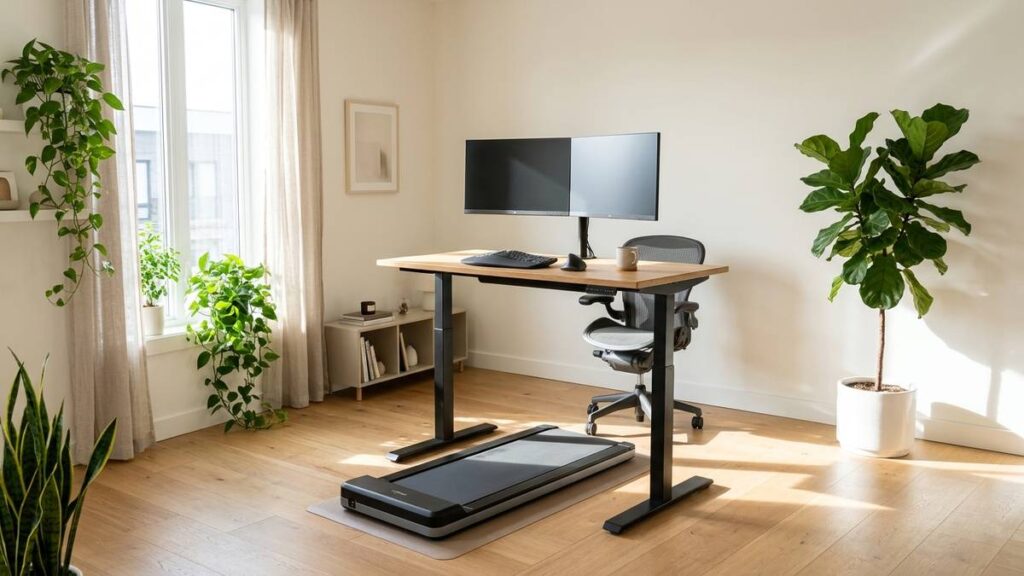
The Silent Modern Epidemic: The Chair Trapped Life
Take an honest mental inventory of how you spent your waking hours yesterday.
If you are like the average modern adult, your day followed a remarkably sedentary itinerary:
You woke up, sat at the kitchen table to eat breakfast, walked to the garage, and sat in your car for a forty-five-minute commute. You arrived at the office, sat down in an ergonomic rolling chair, and stared at dual computer monitors for eight hours, pausing briefly to sit down in a conference room for a staff meeting and sitting down to eat lunch.
At five o’clock, you sat back in your car for the drive home. You walked into your house, ate dinner sitting down, and transitioned directly to the living room couch to relax and watch streaming television for three hours before climbing into bed.
When researchers attach biometric accelerometers to modern adults, the resulting data is staggering:
The average modern office worker spends between ten and thirteen hours of every waking day completely seated and immobile.
For years, public health experts treated prolonged sitting as a minor nuisance, a simple lifestyle habit that caused tight hamstrings and minor lower back stiffness.
However, over the last decade, a mountain of peer-reviewed epidemiological and metabolic research has delivered an unmistakable, sobering verdict:
Prolonged, uninterrupted sitting is one of the most destructive health hazards of modern industrial civilization.
The human body is an evolutionary masterpiece engineered for perpetual locomotion, walking, squatting, carrying, and climbing. When you strap that dynamic biological machine into a static chair for fifty hours a week, virtually every physiological system begins to down-regulate, degrade, and decay.
Here is the unvarnished scientific truth about what sitting all day does to your body, your brain, and your lifespan, along with a practical, step-by-step action plan to break the chair-bound trap without quitting your desk job.
The Instant Metabolic Shutdown: What Happens When You Sit
The physiological damage of prolonged sitting does not take weeks or months to occur. The metabolic collapse begins the very second your hips touch the chair cushion.
The Biological Timeline of Sitting Down:
– Minute 1: The electrical muscle activity in your major postural muscles – particularly the quadriceps, hamstrings, and gluteus maximus – drops to absolute zero. The largest metabolic heat engines in your body shut off completely.
– Minute 90: Lipoprotein Lipase (LPL), an essential enzyme anchored in your capillary walls responsible for capturing circulating blood fats and triglycerides and breaking them down into usable energy, plummets by over ninety percent. Fat molecules remain circulating in your bloodstream, where they are re-routed and stored as visceral fat around your heart and liver.
– Hour 2: High-density lipoprotein (HDL, your protective good cholesterol) drops by twenty percent. Insulin sensitivity in muscle cells declines rapidly; even healthy individuals experience a significant spike in blood glucose levels following a meal because idle leg muscles refuse to absorb circulating blood sugar.
– Hour 4: Blood flow in the femoral arteries slows to a sluggish crawl. Blood pools in the lower legs and feet, increasing intravenous pressure, inflaming endothelial blood vessel walls, and drastically elevating the risk of deep vein thrombosis and chronic cardiovascular disease.
The Exercise Myth: Why a 45-Minute Workout Cannot Save You
The most dangerous, pervasive misconception held by desk workers is what epidemiologists call The Active Couch Potato Syndrome.
Many people think: ‘I know I sit at a desk for nine hours at work, but I go to the gym for forty-five minutes before dinner, so I am totally protected from the risks of a sedentary lifestyle.’
Unfortunately, rigorous medical research has thoroughly debunked this comforting belief.
Sitting for ten hours a day and working out for forty-five minutes is the biological equivalent of smoking a pack of cigarettes a day and eating an apple in the evening. While the apple is healthy, it cannot undo the cellular damage caused by the smoke.
Prolonged muscular immobility operates on entirely separate physiological pathways than aerobic exercise capacity. You cannot out-exercise nine hours of continuous, static muscle paralysis with a brief burst on an elliptical machine.
To stay healthy, you do not just need a workout; you need continuous, non-exercise physical activity integrated throughout your entire waking day.
The Structural Ruin: How the Chair Destroys the Spine
Beyond metabolic decay, sitting wreaks physical havoc on your musculoskeletal system, transforming human posture into a hunched, painful caricature.
The Cascade of Postural Destruction:
- The Anterior Pelvic Tilt and Dead Glutes:
When seated, your hip flexors (psoas and iliacus) remain in a chronically shortened, contracted state. Over time, these muscles permanently adapt and tighten. When you finally stand up, tight hip flexors pull your pelvis downward into an anterior pelvic tilt. Meanwhile, your gluteal muscles – the most powerful stabilizer muscles in the human body – undergo reciprocal inhibition, becoming neurologically dormant (a condition known as gluteal amnesia).
- Disc Pressure and Spinal Compression:
Sitting in a typical slumped office chair increases compressive intradiscal pressure on your lumbar spine by over two hundred percent compared to standing with natural spinal alignment. Over years, this chronic mechanical compression herniates lumbar discs, pinches sciatic nerves, and causes agonizing lower back spasms.
- Forward Head Syndrome (Text Neck):
For every inch your head drifts forward past your shoulders while staring at a laptop screen, the effective weight of your head on your cervical spine increases by ten pounds. A forward head posture of three inches places forty-two pounds of continuous strain on your upper neck muscles and shoulder blades, triggering chronic tension headaches, upper back burning, and early spinal degeneration.
The Neurological Fog: How Sitting Stifles Brainpower
If you care about creative problem-solving, emotional resilience, and professional productivity, sitting in a chair all day is your worst enemy.
When you sit motionless, your heart rate slows and your respiratory depth decreases. Blood flow to the brain drops by up to twenty percent.
Furthermore, moving your muscles releases powerful neuro-protective molecules called myokines, as well as Brain-Derived Neurotrophic Factor (BDNF). BDNF acts like biological miracle-grow for the brain, stimulating neuroplasticity, protecting memories, and generating new synaptic connections.
When you remain seated in a chair for hours, BDNF synthesis drops to baseline, leaving your brain lethargic, uninspired, and prone to repetitive depressive thought loops.
There is a profound evolutionary reason why history’s greatest philosophers, mathematicians, and writers – from Aristotle and Friedrich Nietzsche to Steve Jobs – were obsessive walking thinkers. Movement stimulates cognitive brilliance.
The Antidote: Designing a Dynamic Active Workstation
Escaping the perils of sitting does not require you to throw away your computer and become a park ranger. It requires transforming your work environment into an active movement hub.
The Three Pillars of an Active Workstation:
- The Electric Adjustable Standing Desk:
Invest in a dual-motor electric standing desk that transitions from sitting to standing height at the touch of a button. But heed this critical warning: Do not try to stand for eight hours straight on day one! Standing motionless on hard floors creates its own joint fatigue and foot pain. Aim for the 20-8-2 Rule: For every thirty minutes, spend twenty minutes sitting with good posture, eight minutes standing, and two minutes walking or stretching.
- The Under-Desk Walking Pad:
The ultimate game-changer for modern desk workers is an ultra-slim under-desk treadmill pad. Walking at a gentle pace of 1.2 to 1.5 miles per hour allows you to type emails, take phone calls, and review documents without breaking a sweat or losing focus. Walking for just two hours of your workday logs over eight thousand steps, burns four hundred extra calories, and keeps your metabolic enzymes firing continuously.
- The Anti-Fatigue Topography Mat:
When standing, never stand barefoot on hard concrete or thin carpet. Use an anti-fatigue mat featuring contoured ridges, ramps, and massage balls that encourage your feet and calves to constantly make subtle postural micro-adjustments.
The Power of Movement Snacks: A Daily Anti-Sitting Routine
If you do not have the budget for a standing desk right now, you can still neutralize eighty percent of the damage by implementing Movement Snacks throughout your day.
The Every-45-Minute Movement Menu:
Set a subtle silent timer on your watch for every forty-five minutes. When it vibrates, immediately stand up and perform sixty seconds of movement:
– 10 Air Squats: Re-activates dormant gluteal muscles and pumps blood from the lower legs back to the heart.
– The Doorway Chest Stretch: Place your forearms on a doorframe and step forward to stretch tight pectoral muscles and reverse hunched shoulders.
– The Standing Hip Flexor Opener: Take a long lunge step back, tuck your tailbone under, and raise your arm to stretch the front of your hip.
– 10 Calf Raises: The soleus muscle in the calf functions as your secondary cardiovascular pump, pushing stagnant venous blood back to your core.
Conclusion: Reclaiming Your Biological Birthright
The modern chair was invented as an occasional convenience for rest and contemplation. Industrial society turned it into a full-time biological prison.
You were not engineered by millions of years of evolution to spend your precious, finite life pinned statically to an upholstered chair.
By introducing standing intervals, walking pads, movement snacks, and daily postural awareness into your work routine, you do more than avoid chronic back pain and heart disease.
You reclaim your vitality, sharpen your intellect, and restore the dynamic, energetic physical resilience that is your natural birthright.
Stand up, stretch your arms to the sky, take a deep breath, and start moving today.
The Evening Decompression: Reversing Sitting in Five Minutes
Even if you maintain standing desk intervals during the workday, the cumulative physical fatigue of gravity can leave your hips compressed and lumbar spine stiff by evening.
Perform this five-minute restorative sequence before dinner to reset your musculoskeletal posture:
- The Passive Couch Stretch (Two Minutes per Side): Place your back knee against a wall with your shin vertical, stepping your opposite foot forward into a deep lunge. Squeeze your glute and keep your torso upright. This intensely opens tight psoas and rectus femoris muscles, releasing anterior pelvic tilt.
- The Prone Cobra (Sixty Seconds): Lie face-down on a carpet or yoga mat, arms at your sides. Lift your chest, squeeze your shoulder blades together, and externally rotate your thumbs toward the ceiling. This activates dormant rhomboids and lower trapezius muscles, reversing hunched computer posture.
- The Deep Squat Pry (Sixty Seconds): Sink into a full deep bodyweight squat, pressing your elbows against the insides of your knees to mobilize ankles, knees, and hips.